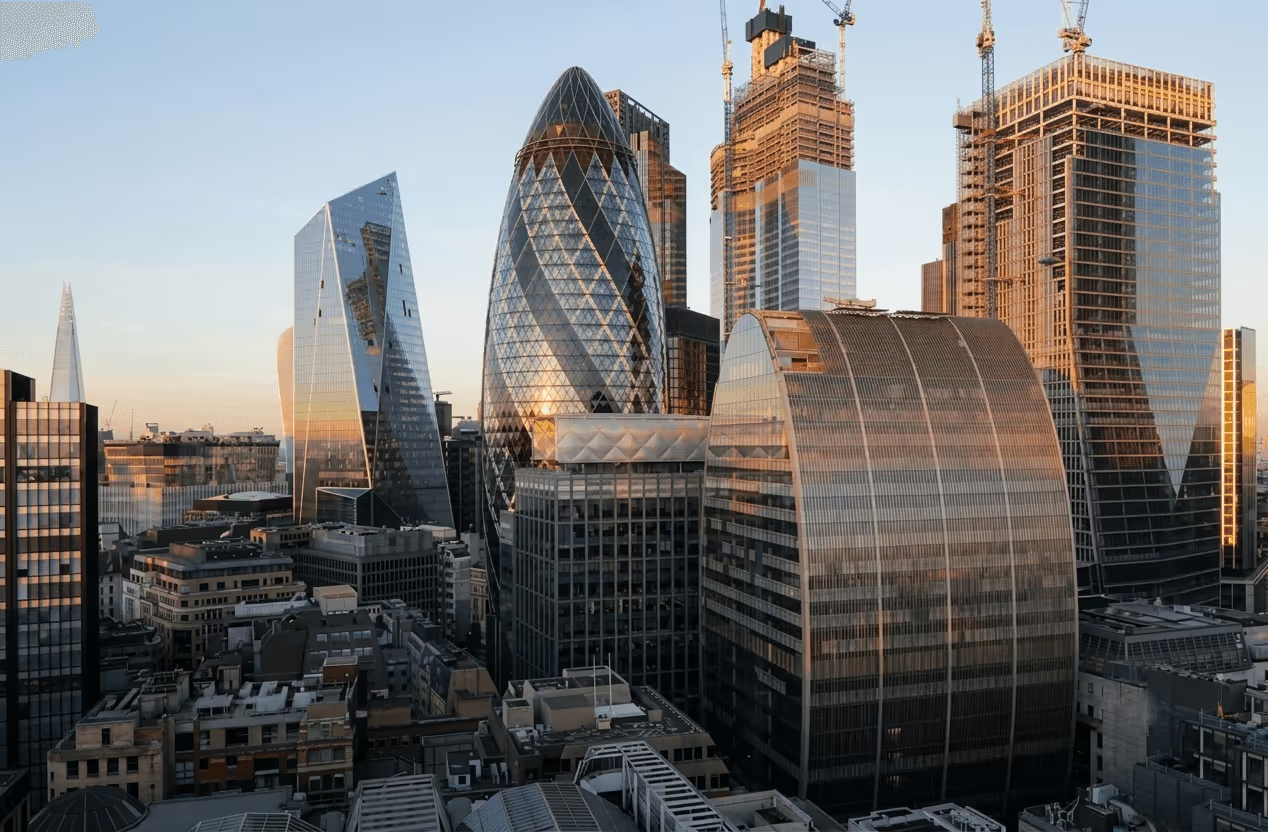
St Mary Axe London: A Mace Construction Time-Lapse Project
Learn how gabrielCAM® captured Mace's project at 70 St Mary Axe in London, showcasing the power of large-format sensors and professional glass.

Sometimes an image says more than a list of features ever could.
The light, the reflections, the detail, the architectural perspective, the clarity of the skyline. To capture images like this, you need more than a basic camera sensor and a fixed plastic lens. You need a good sensor, proper glass, professional lens options and control over the settings. That’s what wins jobs with serious project teams and makes you stand out professionally.
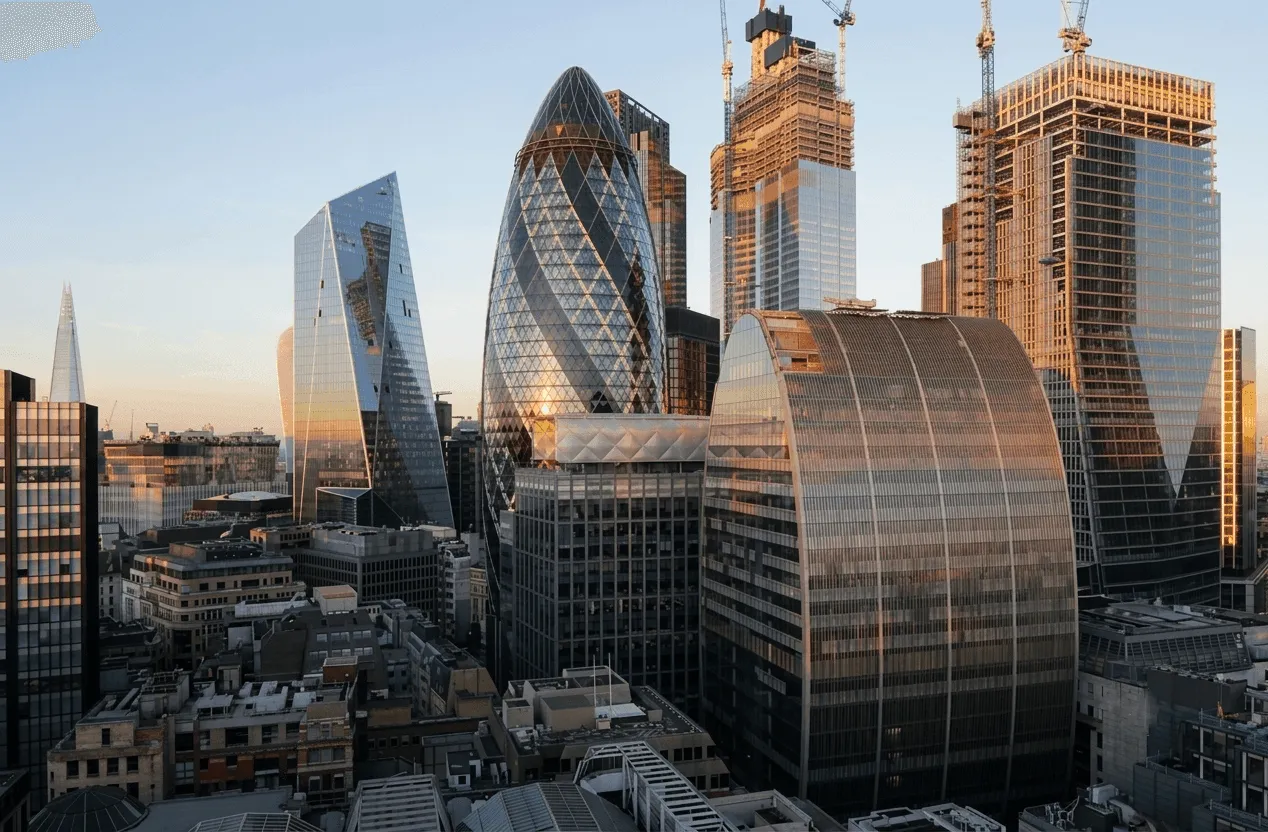
High-Resolution Construction Time-Lapse: St Mary Axe London
A higher-grade large-format camera sensor gives you a cleaner, more flexible file because it generally offers larger photosites, better signal-to-noise performance, stronger dynamic range, better colour depth and more latitude in difficult lighting. On a construction scene, that is important because you are often dealing with brutal contrast: reflective glass, deep shadow, sky detail, cranes, concrete, steelwork, changing weather and different lighting across the day.
A cheaper small sensor may record the scene, but it often does so with more noise, lower tonal separation, weaker highlight recovery, crushed shadows, more aggressive sharpening and compression, and less useful detail when the image is enlarged or inspected closely.
Large-Format Sensors vs Small Sensors in Construction Environments
The lens is equally important. Professional glass lens is not just “clearer”. It resolves more actual detail onto the sensor. It controls distortion, holds sharpness further into the corners, gives better contrast and micro-contrast, handles flare and backlight more effectively, and produces a cleaner image before any software has touched it.
That’s vital, because the sensor can only record the image projected onto it. A poor lens limits the whole system before the sensor even gets involved.
Optical Precision: Why Professional Glass Lenses Win Projects
On construction and architectural subjects, lens quality becomes especially visible. Straight lines, edges, glass facades, steelwork, cladding, cranes and distant detail all reveal optical weaknesses very quickly. Barrel distortion, soft corners, chromatic aberration, poor coatings, flare, low contrast and edge softness all reduce the usefulness of the image.
Professional lens choice also gives control over perspective and framing. Wide? zoom? tilt-shift? All solve different capture problems. A fixed plastic lens gives one view whether that view is right for the project or not.
Together, they produce source imagery with greater detail, better tonal range, colour, perspective control and far more value for zooming, reviewing, archiving, reporting, marketing and long-term evidence. That is why image quality is central to gabrielCAM®.
The platform, the archive, the reporting tools, the time-lapse outputs are all important - but it all starts with the image. And when the image is this good, the difference, in every regard, is palpably visible.